
Comparisons7-minute readFor medtech graduates choosing how to review
MTLE review center or self review? An honest comparison
Compare an MTLE review center with self review: structure, cost of time, flexibility and what both still need. A fair, category-level guide.
If you are deciding between an MTLE review center and reviewing on your own, you are really choosing between structure and freedom. Neither is the correct answer for everyone, and many who pass use a mix. This guide compares the two by category, without naming any center, so you can decide from your own habits.
A disclosure first: TerumoEdge publishes an MTLE simulator, which is a self-review tool. We have tried to describe what a review center does well in its own terms.
MTLE review center or self review: which should you choose?
Choose a review center if you need a fixed schedule, live teaching and people to study with. Choose self review if you already study consistently, have a decent grasp of the six subjects and need to control your hours. Choose both if you want lectures and also want to test yourself under a clock.
| Factor | Review center | Self review |
|---|---|---|
| Structure | Fixed calendar of lectures | You build it |
| Teaching | Live or recorded lectures | Reviewers, handouts, videos |
| Accountability | Cohort and attendance | Your own discipline |
| Flexibility | Low; you follow the schedule | High; you pick the hours |
| Timed full-length practice | Varies by center | Only if you add it |
| Explanations after practice | Varies in depth | Depends on your materials |
| Fit for working reviewees | Depends on class times | Usually easier to fit |
The last two rows are where reviewees get caught. Whichever route you pick, make sure the timed practice exists.
What does a review center give you?
A review center gives you a schedule you did not have to design, teachers who explain the hard topics, and classmates who keep you honest. For many graduates, especially those who studied alone during internship and lost the habit, that is a real advantage.
Centers also compress a vast syllabus into a sequence, so you are less likely to spend three weeks on one subject and forget the others. Many run mock exams, which gives you at least some timed practice.
The weak points are practical. Class times may clash with work, travel eats hours, and a lecture is passive: you can sit through it and still not know whether you can answer an item. Mock exams vary in length and in how well they explain answers. Ask to see a sample before you enrol.
What does self review give you?
Self review gives you control over where your hours go. If you are weak in Hematology and solid in Clinical Microscopy, you can spend your week accordingly, which a fixed class calendar cannot do.
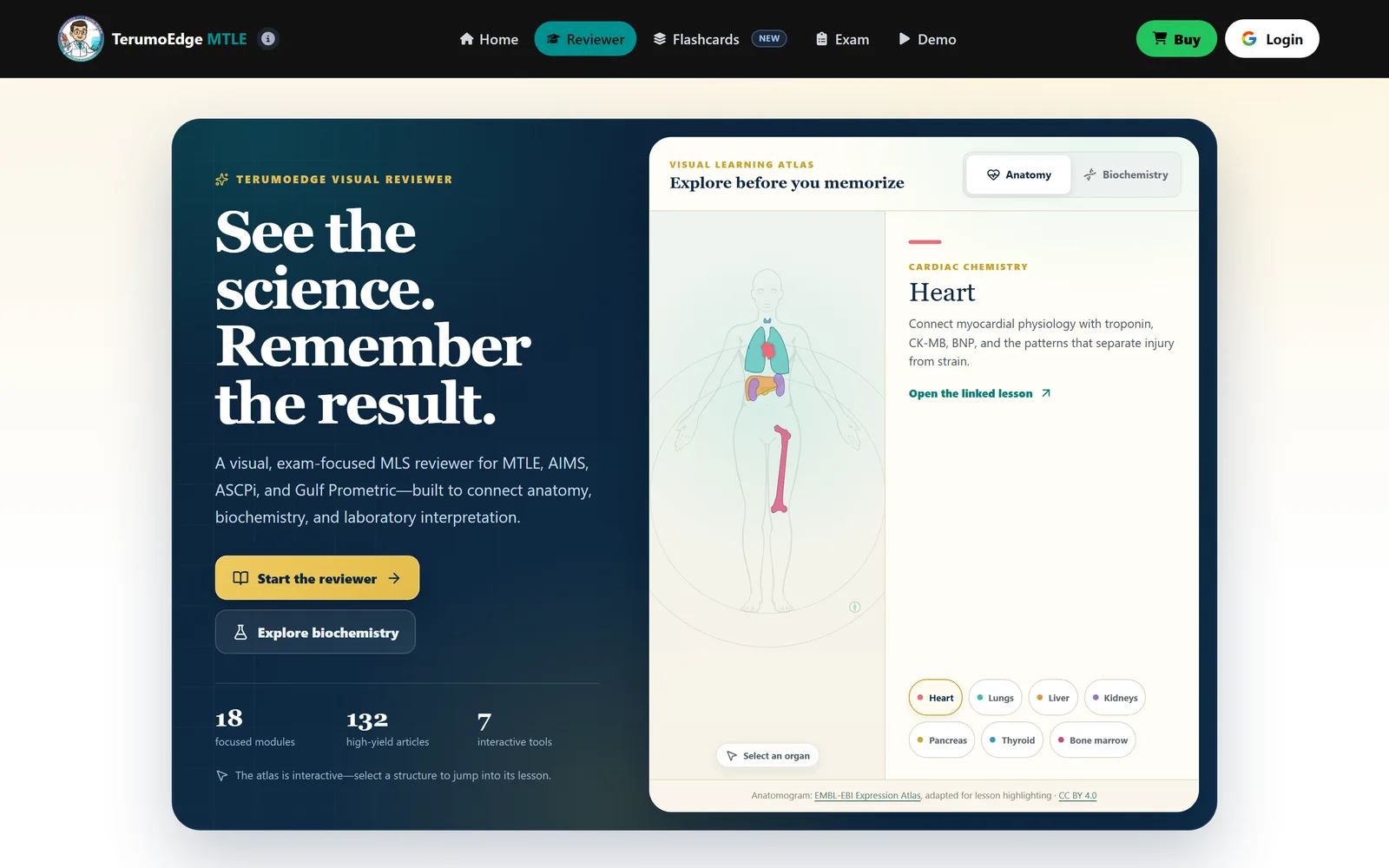
It also costs less travel time, lets you review at your own pace and fits shift work. A visual reviewer, flashcards and a simulator can cover content, recall and rehearsal.
The risk is drift. Without a cohort, it is easy to reread notes, feel productive and avoid testing yourself. Self review works for people who set a schedule in writing and keep to it. If you have never held yourself to a 12-week plan, test that habit honestly before you rely on it.
Who should choose which?
Match the route to your habits, not to what your friends chose.
- Choose a review center if you freeze when planning, learn best from lectures, have uninterrupted days, or failed before and need external structure.
- Choose self review if you work, live far from a center, already know how you learn, or want to focus on specific weak subjects.
- Be cautious with self review if you have not studied consistently since graduation.
- Be cautious with a center if you will miss many sessions because of work, since attendance is what you are paying for.
Nothing in the law forces the decision. Under Sec. 19 of RA 5527, a refresher course or postgraduate training becomes required only after three unsuccessful examinations. Before that, how you prepare is your choice. For a longer look at a plan that suits a job, read reviewing for the MTLE while working.
What is the hybrid approach?
The hybrid approach uses a review center, or structured lectures, for content, and your own timed practice for testing. It keeps the structure that many people need and adds the rehearsal that centers may only offer in part.
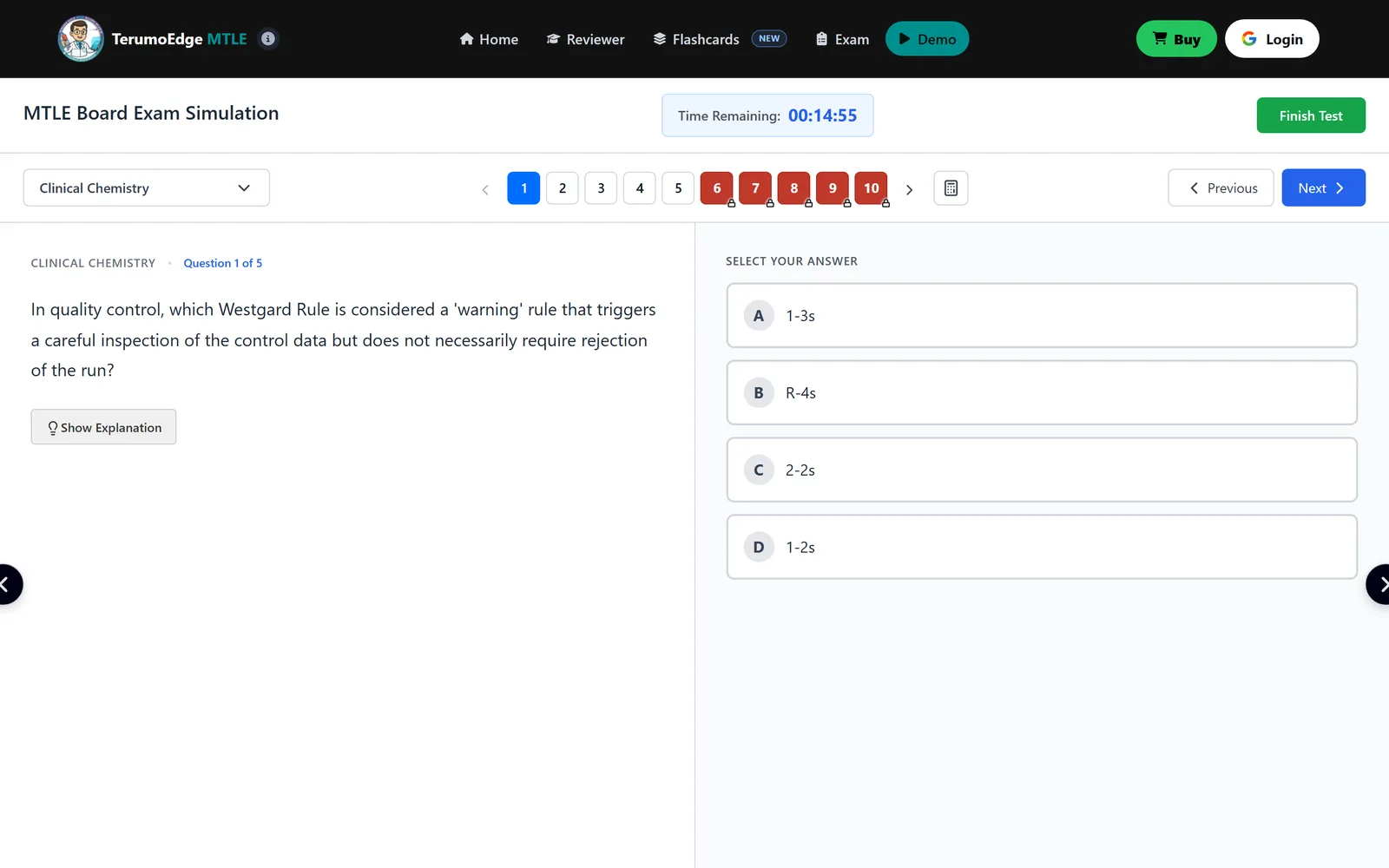
A simple version: attend lectures on the weekdays you can, then use weekends for full-length timed sets in a simulator, scoring each subject separately. After each set, read the explanations for every item you missed, then redo those items a few days later.
You can also reverse it. Review alone through the early weeks, then join a short intensive for the last month if you want the cohort energy when nerves peak. The point is that content and testing are separate jobs, and you should know which resource does which.
What gap does neither route fill by default?
Neither route fills the gap of scored, timed, subject-by-subject practice with real explanations. A lecture does not test you, and a PDF does not time you.
This matters because of the rule in the statute: a general average of at least 75%, with no rating below 50% in any major subject. If your practice produces only one blended score, you cannot see a failing subject until it is too late. Per-subject scores are how you spot a paper sliding toward the floor.
Whether you enrol or study alone, build this in. A simulator does it; so does a disciplined routine of self-timed sets with a good explanatory source. You can try the free TerumoEdge demo for five items per board subject, and see how to choose an MTLE reviewer app for what to check. A study plan turns this into weeks.
How should you judge a review center before enrolling?
Judge a review center by what you can see before paying, not by its promises. Ask for four things and compare the answers across centers.
First, the calendar: dates, class hours and how many subjects fall in each month. Second, a sample mock exam, so you can check its length, whether it is timed and how it explains answers. Third, the teachers' subject coverage, since a center may be strong in Hematology and thin in Histopathology. Fourth, the refund or make-up policy for sessions you miss, which matters most for working reviewees.
Be cautious about any center that promises a pass or quotes figures you cannot trace to PRC. The results figures in our sources come from PRC itself, and they are published per sitting, not per center. A fair center will tell you what it does well and what it leaves to you.
How do you stay on track with self review?
You stay on track with self review by turning intentions into dated appointments. A written plan beats a good mood every time.
Start by choosing your target sitting, March or August, and counting back the weeks. Divide the weeks by the weights of the six subjects, giving the four 20% subjects more hours than the two 10% subjects, but never zero. Put each study block in your calendar with a start time. Then add one full-length timed set per week from week four onwards.
Find one accountability partner, even one, and send each other your weekly score by subject. If you miss two blocks in a row, shrink the plan and keep going, instead of abandoning it. A self-review plan fails mostly through silence, so make the progress visible.
Frequently asked questions
Can you pass the MTLE through self review?
Yes, nothing in RA 5527 requires attending a review course before a first attempt. Passing means a general average of at least 75% with no rating below 50% in any major subject. Self reviewers succeed when they follow a written schedule and test themselves on timed sets. We have no data on how many do.
When should I enrol?
Enrol early enough to cover all six subjects before your target sitting. PRC holds the MTLE in March and August, so work backwards from those months. Ask any center for its calendar, class times and sample mock exams before paying, and check that the schedule fits your work.
Is a review course required?
Only in one case. Under Sec. 19 of RA 5527, an applicant who has not qualified after three examinations may take no further examination until completing a 12-month refresher course in an accredited medical technology school or 12-month postgraduate training in an accredited laboratory. Before three failures, no course is required by that section.
Is online review as good as an in-person center?
It depends on what you need. Online lectures remove travel and suit working reviewees, while in-person classes offer a physical cohort. Judge either by its lectures, its timed practice and the quality of its explanations, not by where you sit. We do not have evidence that one format passes more people.
Sources
From the publisher
Meet the MTLE here first.
TerumoEdge MTLE is an MTLE simulator: board-length practice sets in all six board subjects, sat on a clock, with a full explanation for every item instead of a bare answer key.
- 3,000 items across the six MTLE board subjects, 500 in each
- five board-length sets of 100 items per subject
- A full explanation for every item, not a bare answer key
- A visual reviewer and flashcards beside the question bank
Try the free MTLE simulator demo Five real items per board subject. No account needed.
About this article
Written by the TerumoEdge editorial team, who build the TerumoEdge MTLE Ex-Sim. Exam facts are checked against RA 5527, the Philippine Medical Technology Act of 1969, Professional Regulatory Board of Medical Technology resolutions and PRC announcements, and every article lists its sources. How we write and check our articles.
First published .