
Study strategy7-minute readFor reviewees who freeze under pressure
MTLE anxiety: how to stay steady through two exam days
MTLE anxiety is common and manageable. Build familiarity, stamina and a reset routine for two exam days, and know when to ask for professional support.
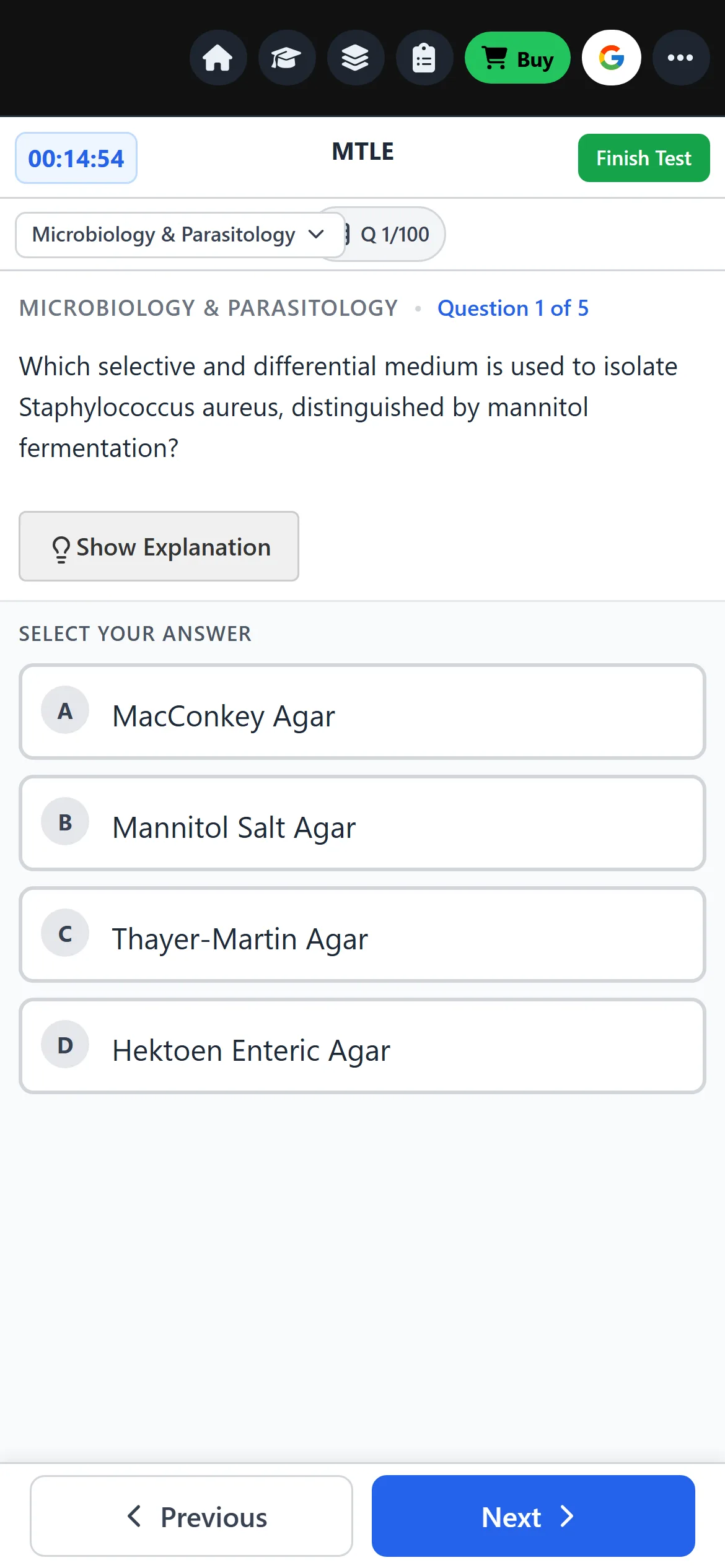
You know the material, and then you picture the exam room and your mind goes white. That is MTLE anxiety, and it is one of the most common things reviewees report to each other in the final weeks. It is also one of the most trainable. This post is for the reviewee who freezes under pressure, and it settles three things: why the nerves feel so large, how to shrink them with practice, and when they need more than a study tip.
Nothing here is medical advice. It is practical preparation from the exam's structure, plus ordinary wellbeing habits that most people find useful.
Why does MTLE anxiety feel bigger than the exam?
MTLE anxiety usually grows from uncertainty and stakes together, and you can reduce both. The stakes are real: a license is on the line, and the rule is a general average of at least 75% with no rating below 50% in any major subject, as RA 5527 states. But the uncertainty is the part you control.
Most of what frightens people is unknown: the room, the pace, the feeling of a hard item at hour two of a paper. Each unknown you convert into a rehearsed experience removes a piece of the fear. Notice also that the rule is an average across six papers. One bad item, or even one bad hour, cannot sink you by itself. Only a pattern can, and a pattern is what practice fixes.
How do you make the exam familiar before the day?
Make the exam familiar by repeating its conditions until they bore you. Recent PRC programs, as relayed by a secondary source, describe six 2-hour papers across two days, starting at 8:00 AM. Your practice should copy that shape in steps.
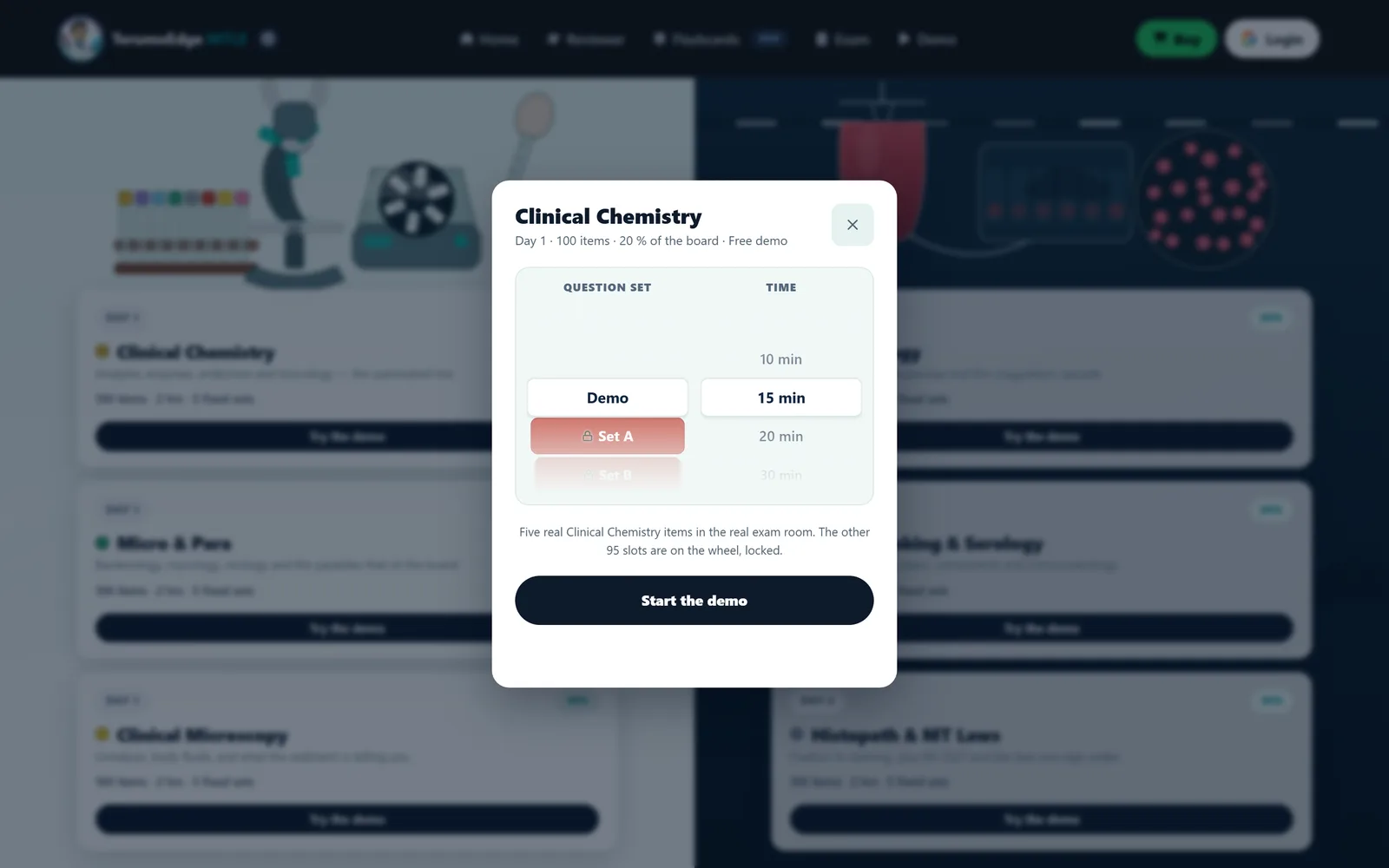
Start with short blocks, then move to a full paper with the clock running and no phone. TerumoEdge offers five board-length sets of 100 items per subject, which suits this kind of ladder. The point of a mock exam is not the score. It is the repetition of sitting down, starting the clock and carrying on through a bad stretch. You can try the free demo first to see the screen and the pacing before committing to anything.
| Rung | What you do | What it trains |
|---|---|---|
| 1 | 20 untimed items, read every explanation | Calm reading of the stem |
| 2 | One short timed block, phone away | Starting with the clock running |
| 3 | One full board-length set in the real time limit | Pace and stamina |
| 4 | Two full sets in one day, a lunch gap between | Recovering after a hard paper |
| 5 | Two consecutive days of three papers each | The real two-day load |
How do you build stamina for six papers in two days?
Build stamina by practising long sittings on purpose, because the late papers are where tired readers misread stems. The recent timetable runs a paper from 8 to 10, another from 11 to 1 and a third from 2 to 4, each day. The last paper of each day is the one you reach on the least energy.
Begin with one full paper on a normal morning, then add a second, then train the afternoon slot when your focus is naturally lowest. Eat a real meal at your usual lunchtime, because a full day on coffee and nerves is a poor rehearsal. Sleep matters more than a late-night review. A reviewee who drills until 2 AM and sits a rehearsal at 8 AM is practising being tired, not being ready.
Keep a short log of how you felt at the start, middle and end of each sitting. Patterns show up quickly, and they tell you whether you need more sleep, more food or simply more reps.
What is a reset routine for when you blank?
A reset routine is a rehearsed 60-second sequence you use when your mind goes blank, so you are not inventing a response in the moment. Blanking is a stress reaction, not proof you do not know the answer. The fix is to interrupt the spiral and return to the page.
Try this, and practise it during mock papers so it is automatic:
- Put your pen down and breathe out slowly, longer than you breathe in, three times.
- Relax your shoulders and unclench your jaw.
- Reread the stem once, slowly, and underline the question word.
- Remove the two options you can say are wrong.
- Choose, mark it for return if the paper allows, and move on.
If a topic is truly gone, do not stay on it. One item is a small fraction of a paper, and a stuck minute costs more than a guessed answer. The time management guide covers how to set checkpoints so one hard item never eats the paper.
What should you do between Day 1 and Day 2?
Between the two days, rest on purpose, because the evening after Day 1 is when many reviewees damage Day 2. The pull is to replay every item you doubted. Resist it. Whatever you answered is finished, and a late-night postmortem only adds worry to the next morning.
Do this instead. Eat a proper dinner and prepare your allowed items for the morning. Recent programs list two pencils, a black-ink ballpen, envelopes and one non-programmable calculator, and they report an early arrival, but check the program for your own sitting. Do a light, short recall of Day 2 subjects only if it calms you, then stop. Go to bed at your usual hour and avoid messaging classmates about the day's questions.
For the full run of dates and timetable, see the schedule and exam day guide. The last-month plan also shows how to taper in the final days.
When does anxiety need more than a study plan?
Anxiety needs more than a study plan when it affects your sleep, appetite, concentration or daily life for more than a short stretch, or when it feels unmanageable. Preparation tips can help ordinary exam nerves. They are not a treatment for an anxiety problem, and a licence exam is not worth your health.
Signs worth taking seriously include panic that comes without warning, persistent dread, trouble sleeping for many nights, or avoiding your review altogether. If this sounds like you, consider talking with a qualified professional, such as a doctor, a counsellor or a mental health practitioner, and lean on a trusted family member or friend. Asking for support is a practical step, not a weakness, and many people do it during board review.
If you are in crisis or thinking of harming yourself, contact local emergency services or a trusted person right away. Your wellbeing comes before any exam date, and the next sitting will still be there.
Frequently asked questions
How do I stop blanking during the MTLE?
You cannot prevent every blank, but you can shorten it. Rehearse a short reset: slow breaths, relax your shoulders, reread the stem, eliminate what you can and move on. Practise it during timed mock papers so it feels automatic. A blank on one item is a small share of a two-hour paper, so keep going rather than staring.
Is it normal to feel unprepared before the MTLE?
Yes. Almost every reviewee feels underprepared, because the scope across six subjects is large and you notice gaps more than strengths. Feeling unprepared is not a reliable measure of your actual readiness. Test yourself with timed, board-length sets and review the explanations, then judge by results and trends rather than by how you feel.
Should I take full mock exams?
Yes, in the last stretch of review. Full, timed papers train pace, stamina and your reset routine, which short quizzes do not. Treat them as rehearsal, not as predictions of your rating. Go in with a plan to review mistakes afterwards, and do not sit one the night before the exam.
Can anxiety affect my result even if I know the content?
It can, mostly by slowing reading, causing misreads and eating time. That is why rehearsing the conditions matters as much as learning content. Practice under the clock lowers the strain, so familiar conditions leave more attention for the actual question.
Sources
From the publisher
Meet the MTLE here first.
TerumoEdge MTLE is an MTLE simulator: board-length practice sets in all six board subjects, sat on a clock, with a full explanation for every item instead of a bare answer key.
- 3,000 items across the six MTLE board subjects, 500 in each
- five board-length sets of 100 items per subject
- A full explanation for every item, not a bare answer key
- A visual reviewer and flashcards beside the question bank
Try the free MTLE simulator demo Five real items per board subject. No account needed.
About this article
Written by the TerumoEdge editorial team, who build the TerumoEdge MTLE Ex-Sim. Exam facts are checked against RA 5527, the Philippine Medical Technology Act of 1969, Professional Regulatory Board of Medical Technology resolutions and PRC announcements, and every article lists its sources. How we write and check our articles.
First published .