
Study strategy7-minute readFor reviewees who run out of time
MTLE time management: how to pace a two-hour paper
MTLE time management for a two-hour paper: the pacing formula, checkpoints, long and calculation items, the last ten minutes and how to train your pace.
Running out of time on a licensure paper feels like a knowledge problem, but it is usually a pacing problem. If you have found yourself rushing the last third of a practice set, MTLE time management is the skill to train. This guide gives you the formula, the checkpoints and a way to practise, without assuming anything about how many items a PRC paper holds.
What does MTLE time management start with?
Each paper is two hours, which is 7,200 seconds, and your pace per item is that number divided by the item count. A recent PRC program, relayed by Exams Pinas, schedules six papers of two hours each across two days, between 8:00 AM and 4:00 PM. That source is secondary, so check the PRC program for your sitting.
PRC's item count per paper is not stated in the sources we rely on, so this guide uses the product's own practice unit: a set of 100 items. For that set, 7,200 seconds divided by 100 is 72 seconds per item. If you reserve ten minutes (600 seconds) for review, your working pace is 66 seconds per item.
If a paper has N items, the same formula applies: (7,200 minus your reserve) divided by N. Do that sum for any count, and you will never be surprised by it.
What checkpoints keep you on pace?
Checkpoints are the simplest pacing tool: look at the clock at fixed points and compare it with where you should be. For a set of 100 items on a 66-second working pace, use half-hour checkpoints.
| Checkpoint | Time used | Item target for a 100-item set |
|---|---|---|
| 1 | 30 minutes | About item 27 |
| 2 | 60 minutes | About item 55 |
| 3 | 90 minutes | About item 82 |
| Finish | 110 minutes | Last item answered |
| Review | 110-120 minutes | Marked items and a sweep for blanks |
Being a few items behind at a checkpoint is normal. Being ten items behind is a signal to speed up for the next stretch by skipping the longest items. Being ahead is a gift: bank it for the calculations. The rule is to react at the checkpoint, not at the end.
How should you handle long and calculation items?
Treat long items and calculations as items that earn a time budget, not a blank cheque. A stem with a case history, a table of results or a multi-step calculation will cost more than 66 seconds. Plan to pay that extra only for the items that deserve it, and recover the time on short recall items that cost 30 seconds or less.
For calculations, write the formula first, then the units, then the numbers, as the Clinical Chemistry guide recommends. If your first pass shows a dead end, mark the item and move on. A second look later, after the rest of the paper has warmed you up, often goes faster.
Use the options. If the question asks for a magnitude, rough estimation can discard options that are off by a factor of ten before you compute anything. That is a pacing tool as well as a checking tool.
When should you move on from an item?
Move on once you have spent roughly double your target time without a clear route to an answer. For a 66-second pace, that is about two minutes. Make your best guess, mark the item, and go to the next one. A missing answer earns nothing, so never leave a blank unless the instructions penalise guessing, which you should confirm in the PRC program for your sitting.
The reason to move on is simple: the next item is worth the same as this one, and it may take 20 seconds. Giving two minutes to a stubborn item at the cost of three easy ones is a poor trade.
Avoid the trap of the "almost solved" item. The feeling that the answer is a few seconds away is a bias, not a measurement. Use a firm rule, apply it every time, and trust it. Your review time at the end is where marked items get a second look.
What should you do in the last ten minutes?
Use the last ten minutes for a sweep, not a re-do. First, make sure every item has an answer, since a guess beats a blank. Second, return to your marked items in order of how close you were to a decision. Third, if time remains, re-read only the items where you changed your mind from your first instinct, because those are the ones where a misread is most likely.
Do not re-check every answer. A paper of 100 items at ten minutes means six seconds per item, which is only enough to confirm the pencil is in the right circle. The better use is the handful of items you flagged.
Keep an eye on the clock at the five-minute mark. Then stop and breathe for a moment before your final sweep. Two-hour papers are long, and the last ten minutes are where tired minds make careless errors.
Why does pace change across the three papers of a day?
Pace drifts across a day because attention and energy drop, and the schedule is built so the drift lands in the third paper. A recent PRC program as relayed by Exams Pinas places the papers at 8:00 to 10:00, 11:00 to 1:00 and 2:00 to 4:00. You carry the cost of the first two into the third, after a midday break of an hour.
Plan for it. Set a slightly more conservative target for the third paper, and expect to spend more time re-reading stems late in the paper. Make food and water part of the plan during the breaks, because a hungry mind reads slowly. Keep your calculator and pencils ready so no minutes go on fumbling.
Rehearse the afternoon paper specifically. In your two-day rehearsals, sit the third paper last, without a long rest before it. Record your checkpoint times for each of the three papers and compare them. If the third paper runs slower by more than a few items per checkpoint, add endurance work to your plan.
One more habit helps: begin each paper with the same thirty-second routine. Breathe, read the first item slowly and write your pacing targets on the scratch area, if the program allows it. A fixed start steadies the first checkpoint.
How do you train your pace?
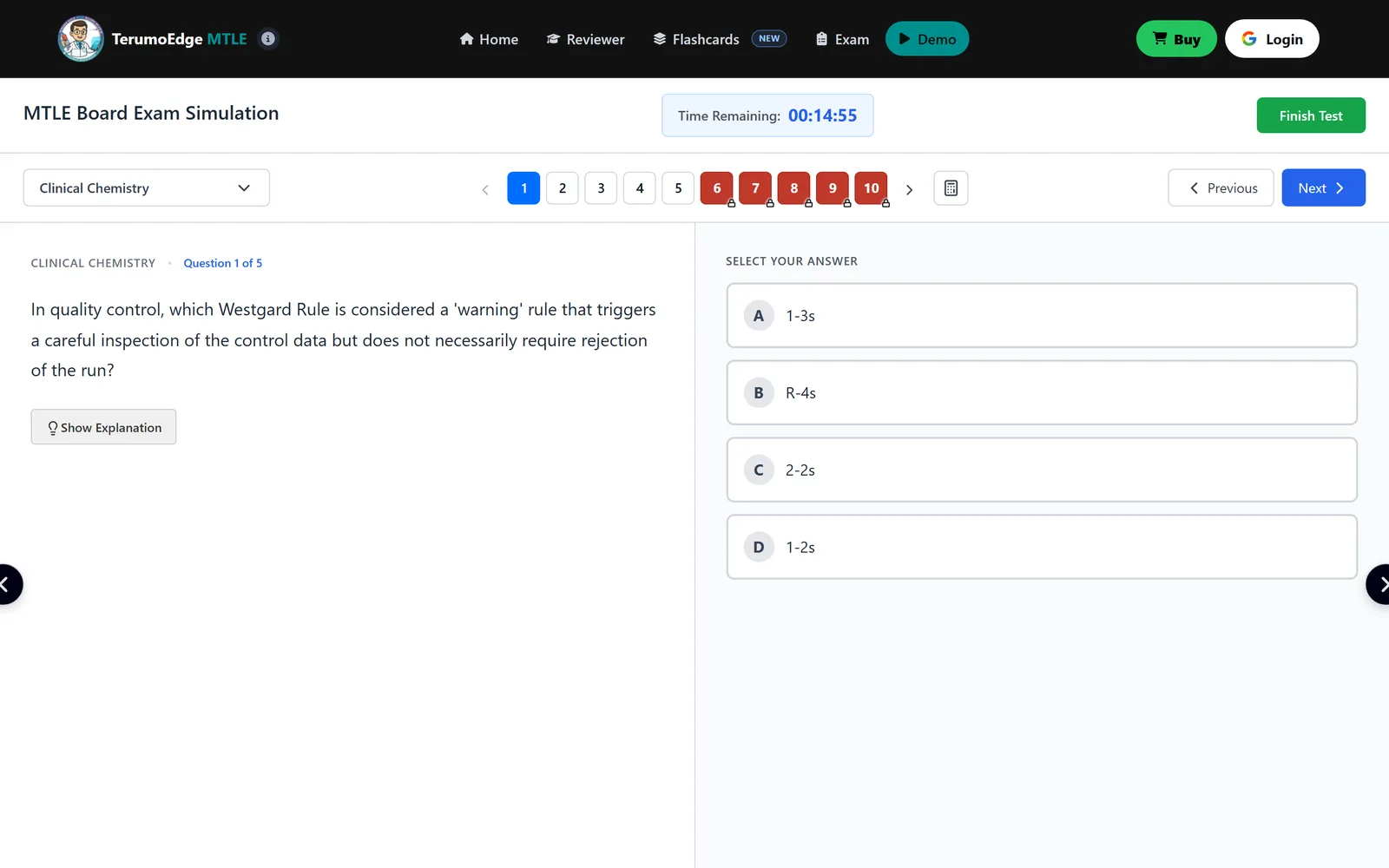
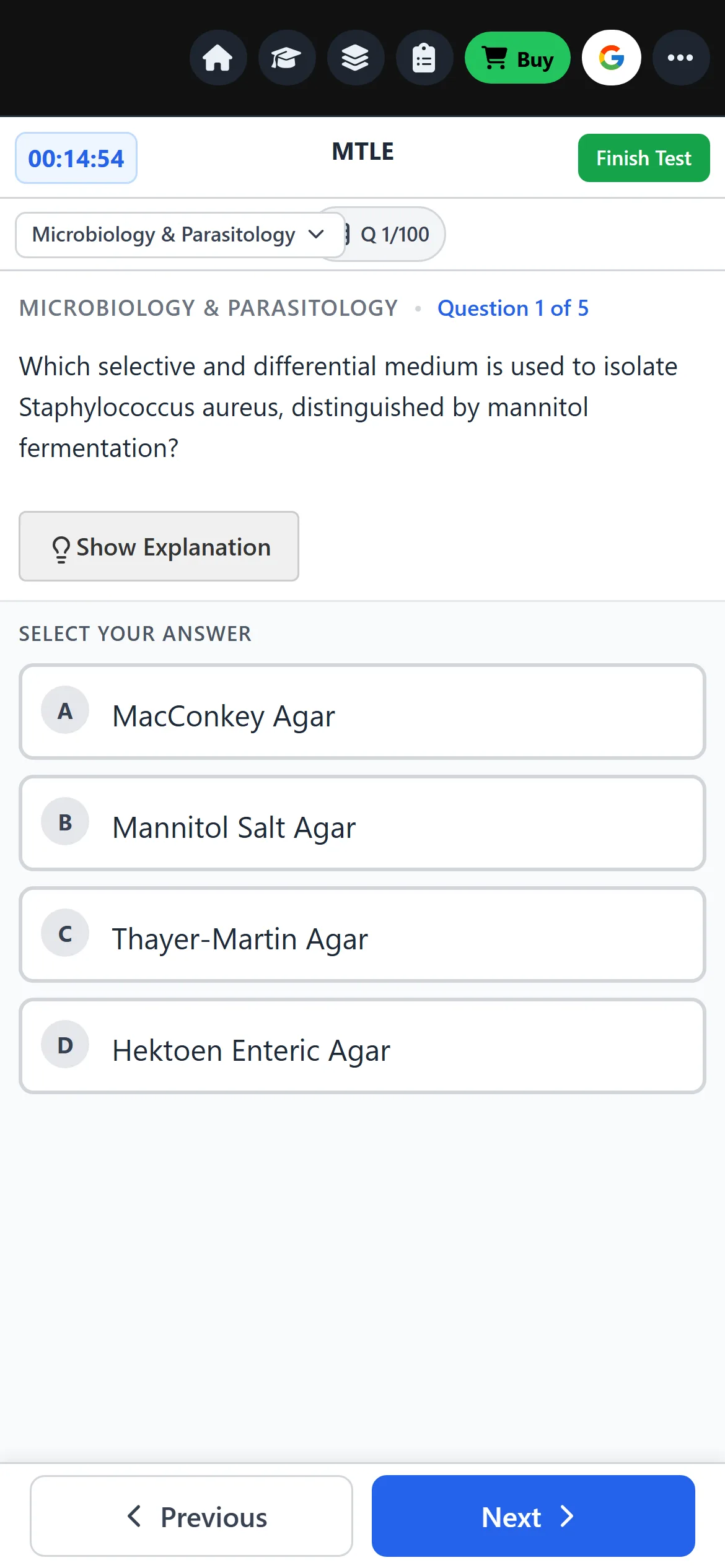
Train your pace by sitting timed sets, ideally from the first week. The product's practice sets are board-length (100 items, five per subject), run on a clock, with an explanation for every item after you finish. Each set gives you a pacing record: your checkpoint times, the items that stalled you and the number you had to guess.
Stage it. In the first weeks, do short timed groups at the target pace. By mid-plan, do full sets with checkpoints. In the last weeks, do back-to-back papers as in the two-day rehearsal described in the 12-week study plan.
Work on endurance too. Day 1 has three papers back to back between 8:00 AM and 4:00 PM, so the third paper is where pace collapses most often. Rehearse it tired. You can try five items in each subject in the free demo to see how the clock and the review screens behave.
Frequently asked questions
How long is each MTLE paper?
A recent PRC program, relayed by Exams Pinas, gives each of the six papers two hours: three papers on Day 1 and three on Day 2, between 8:00 AM and 4:00 PM. Confirm the times in the PRC program for your sitting, as this is a secondary source for an earlier cycle.
How many seconds should I spend per item?
It depends on the item count, which our sources do not state for PRC papers. Use the formula: 7,200 seconds minus your review reserve, divided by the number of items. For the product's sets of 100 items, that is 72 seconds in total or 66 with a ten-minute reserve.
Should I answer in order?
For most reviewees, yes: work in order, mark stuck items and return. Skipping around costs time. The exception is a paper where you know one section is your weak area; even then, answer the quick items first and return to the long ones.
Will practising pace change my score?
It can protect it. Pace training does not add knowledge, but it stops known material from being lost to a rushed finish. Because the statute sets a 50% floor in every major subject, a rushed last third of a paper is a risk. See the passing rules.
Sources
From the publisher
Meet the MTLE here first.
TerumoEdge MTLE is an MTLE simulator: board-length practice sets in all six board subjects, sat on a clock, with a full explanation for every item instead of a bare answer key.
- 3,000 items across the six MTLE board subjects, 500 in each
- five board-length sets of 100 items per subject
- A full explanation for every item, not a bare answer key
- A visual reviewer and flashcards beside the question bank
Try the free MTLE simulator demo Five real items per board subject. No account needed.
About this article
Written by the TerumoEdge editorial team, who build the TerumoEdge MTLE Ex-Sim. Exam facts are checked against RA 5527, the Philippine Medical Technology Act of 1969, Professional Regulatory Board of Medical Technology resolutions and PRC announcements, and every article lists its sources. How we write and check our articles.
First published .