
Your situation7-minute readFor first-time MTLE takers
First-time MTLE taker? What to do from graduation to exam day
A guide for the first time MTLE taker: the rules, the subject weights, how to choose a review structure and what to do in your first month.
You have finished your internship, the graduation photos are posted, and now everyone asks when you are taking the boards. If you are a first time MTLE taker, the next few weeks are less about studying harder and more about setting things up well. This guide walks you from graduation to exam day: what to learn about the rules first, how to choose a review structure, what to do in your first month and which habits keep you steady.
You do not need to know everything on day one. You need a clear picture of the exam, one plan and a start date.
What do first-time MTLE takers underestimate?
First-time takers most often underestimate the breadth of six subjects and the importance of timed practice. Four years of coursework feels like it should be enough, but the MTLE tests recall across all six subjects, back to back, under a clock. Knowing a topic when you read it is not the same as retrieving it in a two-hour paper.
They also underestimate the 50% floor. A graduate who is strong in Hematology and Clinical Chemistry but ignores the shorter papers can still fail on one weak subject. And many underestimate the logistics: filing windows, early arrival and the stamina needed for two long days.
| Trap | Habit that fixes it |
|---|---|
| Reading everything once and calling it review | Answer timed items weekly and read every explanation |
| Skipping the 10% papers | Give them a short block every week |
| Switching reviewers every few weeks | Choose one structure and keep it |
| Saving full practice papers for the end | Start board-length sets in the first month |
| Studying late and sleeping little | Fix a sleep and meal routine first |
What are the rules a first time MTLE taker must know?
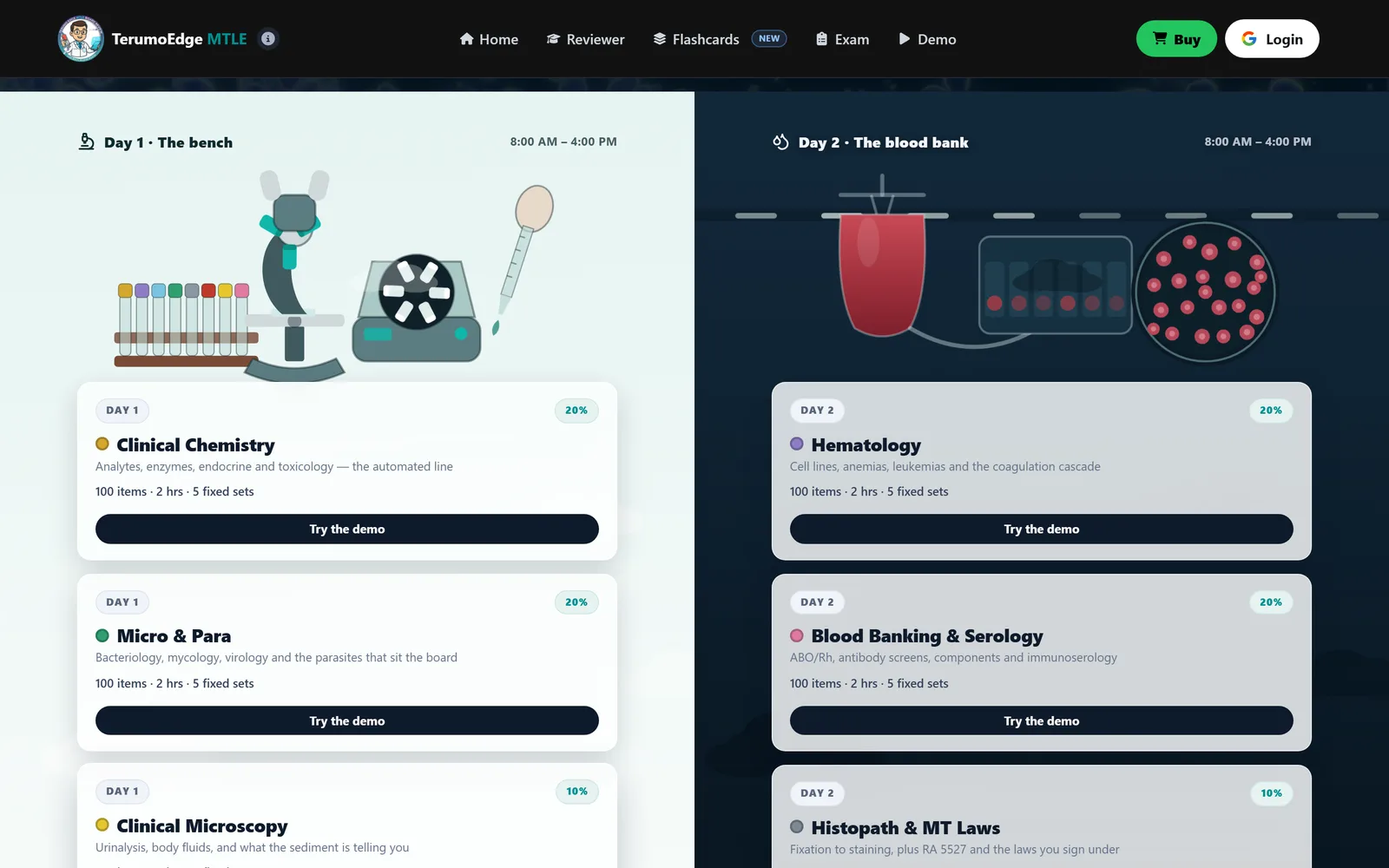
The rule that decides your result is simple: a general average of at least 75% in the written test, with no rating below 50% in any of the major subjects, as stated in RA 5527, the Philippine Medical Technology Act of 1969. The same law sets the subject weights: Clinical Chemistry, Microbiology and Parasitology, Hematology, and Blood Banking and Serology at 20% each, and Clinical Microscopy and Histopathologic Technique at 10% each.
The statute also says that after three failed examinations, a further attempt requires a 12-month refresher course or postgraduate training in an accredited setting. You do not need to plan around this, but it explains why a first attempt deserves a real plan. For the full rule with a worked example, read the passing score guide.
Check the current filing window and the exam program with PRC before you plan. The 2026 schedule lists March and August sittings, and PRC announcements do not state a CBT format.
How should you choose a review structure?
Choose a review structure by asking which one you will actually follow, because consistency matters more than which option looks best. A review center gives a schedule, lectures and a cohort. Self review gives control of your time and your pace. Many graduates blend the two, using lectures for weak subjects and self-driven timed practice for the rest.
Ask yourself three honest questions. Do you need someone to set the pace for you? Do you have a quiet place and steady hours to study? Can you afford the commute and the time? The review center versus self review comparison sets out the trade-offs without naming providers.
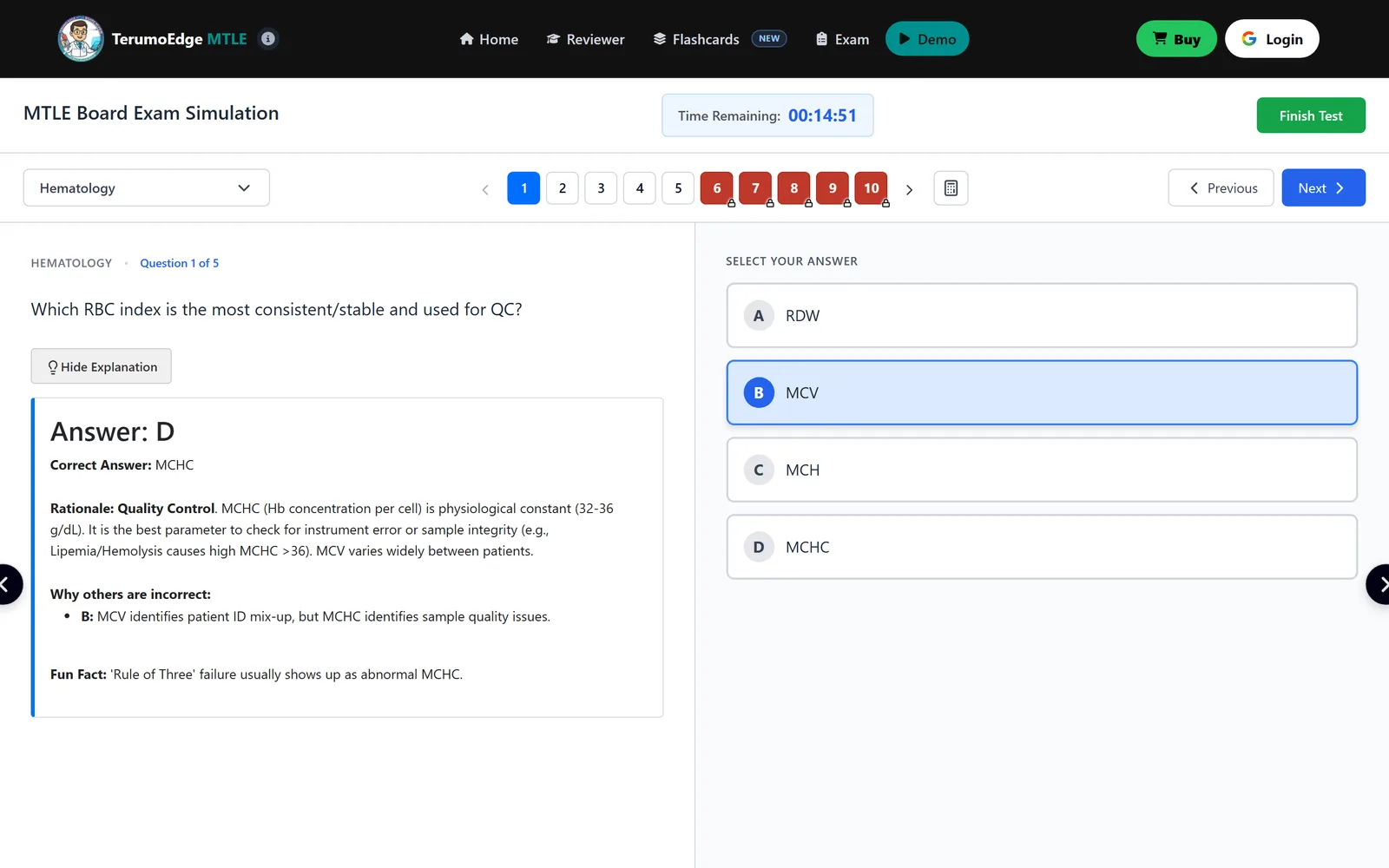
Whatever you pick, make sure it includes timed sets with explanations. TerumoEdge, which publishes this blog, is a simulator, so weigh this accordingly. It offers five board-length sets of 100 items per subject, and a free demo with five items per board subject lets you test the format at no cost.
What should your first month look like?
Your first month should build a routine, a baseline and a habit of practice, not finish the syllabus. Spend week one on setup: choose your structure, list your filing dates, and gather one set of notes. In week two, take a short timed block in each of the six subjects to find your baseline.
From week three, work by weight. Give the four 20% subjects most of your hours, and a short block each week to the two 10% subjects so the 50% floor never worries you. Read every explanation, including for items you got right, because a right answer reached by guessing is a hidden gap.
Keep a mistake notebook with one line per error: the topic, why you missed it and the fix. Review it weekly. The 12-week study plan lays out a full schedule if you want one to adapt.
How hard is the MTLE for first-timers?
PRC publishes overall results, not first-timer results, so no source here can tell you how first-timers specifically fared. Overall figures are public. In March 2026, 7,838 of 9,317 examinees passed, and in August 2026, 4,204 of 5,634. By our arithmetic from those counts, that is about 84% and 75%.
Treat those as context, not a promise. Rates differ between sittings, and a rate describes a whole group, not you. The results and passing rates guide lays out sitting-by-sitting counts. What you control is your preparation: coverage of all six subjects, timed practice and rest.
What should you sort out in the first week after graduation?
Sort out paperwork and dates first, because missed deadlines are the one avoidable way to lose a sitting. PRC publishes a schedule each year with filing windows for both the March and August examinations. For 2026, the PRC schedule listed filing from December 2025 to early February for March, and from mid-May to mid-July for August.
Next, gather your documents early and ask your school what it will release and when. Then pick a target sitting and count backwards. A graduate who finishes in the middle of the year often aims for the next sitting that leaves at least twelve weeks of real review. Write that date at the top of your notebook. It turns a vague plan into a calendar, and it tells you how many weeks you can spend on each subject.
Finally, tell the people around you your plan, so family expectations match your schedule.
Which habits help most before exam day?
The habits that help most are small, steady and boring. Study at the same time most days. Do a short daily recall session, such as flashcards, to keep older topics alive while you learn new ones. Sleep enough, eat properly and move your body, because a tired reviewee retains less.
Rehearse the real conditions near the end: two consecutive days, three two-hour papers each, no phone. Recent programs, as relayed by a secondary source, list the allowed items and prohibit phones and review materials, so confirm the rules for your own sitting.
If nerves are your biggest concern, the anxiety guide covers a rehearsal ladder and a reset routine. Finally, give yourself permission to rest one evening a week. A review that you can sustain for months beats a sprint you abandon in week three.
Frequently asked questions
When should a first-time MTLE taker start reviewing?
Start as soon as your filing and exam date are settled. Many graduates plan backwards from March or August and allow around three months of focused review, but you can start earlier with lighter weekly blocks. Starting timed sets in your first month matters more than the exact start date.
Do I need a review center to pass the MTLE?
No law or PRC rule requires one for a first attempt. The statute mandates a course only as a 12-month refresher after three failed exams. A review center helps people who need structure and a cohort. Self review suits those with discipline and a quiet place to study. Either works if it includes timed practice.
How hard is the MTLE?
Overall passing figures are published by PRC for each sitting, and they vary. For example, about 84% of examinees passed in March 2026 and about 75% in August 2026, by our arithmetic from PRC counts. These are overall figures, not first-timer figures. Your own preparation matters more than any average.
What if I fail my first attempt?
You can retake. The statute requires a refresher or training only after three failed examinations. A general rating of at least 70% also lets those who fell short register as a Medical Laboratory Technician, per PRC announcements. Read the retaker strategy before deciding your next step, and confirm details with PRC.
Sources
- Republic Act No. 5527, the Philippine Medical Technology Act of 1969 — Lawphil
- 2026 Schedule of Examination — PRC
- March 2026 MTLE Results Released in Three (3) Working Days — PRC
- August 2026 MTLE Results Released in Five (5) Working Days — PRC
- Official Schedule and Guidelines, August 2025 MTLE — Exams Pinas (secondary, relaying PRC guidelines)
From the publisher
Meet the MTLE here first.
TerumoEdge MTLE is an MTLE simulator: board-length practice sets in all six board subjects, sat on a clock, with a full explanation for every item instead of a bare answer key.
- 3,000 items across the six MTLE board subjects, 500 in each
- five board-length sets of 100 items per subject
- A full explanation for every item, not a bare answer key
- A visual reviewer and flashcards beside the question bank
Try the free MTLE simulator demo Five real items per board subject. No account needed.
About this article
Written by the TerumoEdge editorial team, who build the TerumoEdge MTLE Ex-Sim. Exam facts are checked against RA 5527, the Philippine Medical Technology Act of 1969, Professional Regulatory Board of Medical Technology resolutions and PRC announcements, and every article lists its sources. How we write and check our articles.
First published .